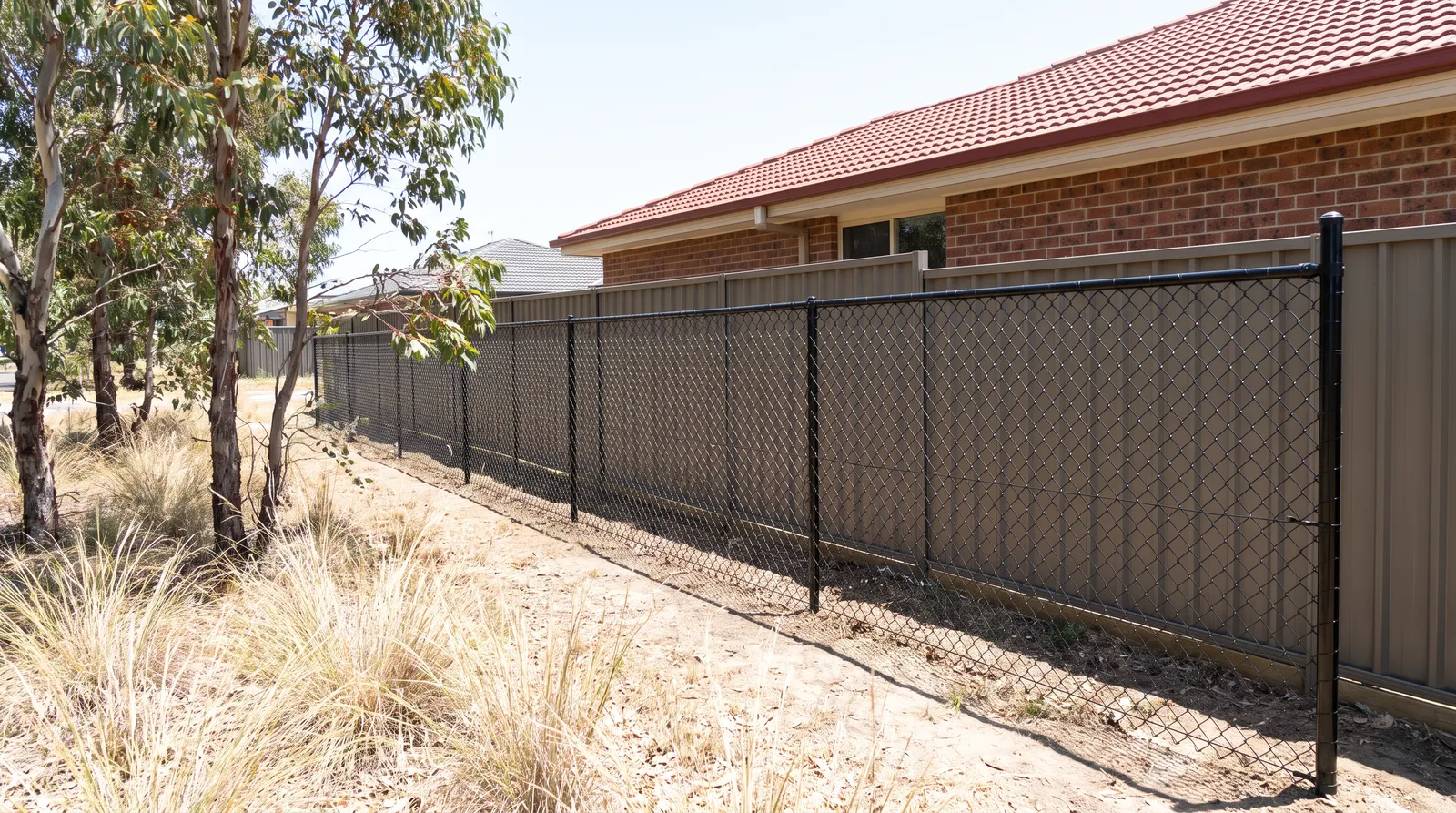
Chainwire is one of the most practical fences you can put around a home: strong, affordable and long-lasting. But not every chainwire fence is the same. A handful of choices, height, mesh, coating, posts and gates, decide how it looks, how secure it is and how long it lasts. Here is how to get them right.
Before anything else, be clear on the purpose. Are you keeping a dog in, keeping kids safe near a pool or road, marking a boundary, or deterring intruders? A containment fence for pets can be lower and lighter than a security boundary along a laneway. Knowing the priority makes every other decision easier.
For most homes, a fence between 1.2 and 1.8 metres covers the common jobs. Around 1.2 metres suits front boundaries and pet containment where you still want an open feel; 1.8 metres gives better security and privacy for side and rear boundaries. If a pool is involved, the fence and gates must meet NSW pool-barrier rules, so that is worth flagging early.
A smaller mesh aperture and a thicker wire gauge make a fence harder to climb or cut, which is the way to go for security. A more open mesh is lighter and cheaper and is fine for simple boundaries. We can walk you through the trade-off for your situation.
Plain galvanised chainwire is the workhorse: tough, economical and rust-resistant. Black PVC-coated chainwire adds a smart, low-glare finish that tends to disappear into a garden rather than dominate it, and the coating gives extra protection against corrosion, which is worth having closer to the coast. For many Newcastle homes the black option is the sweet spot between looks and durability.
The fence is only as good as what holds it up. Properly sized galvanised posts, set in concrete footings at the right spacing, keep the line straight and tight for the life of the fence. Skimping here is the most common reason a cheap fence sags within a few years.
Think about how you will move through the fence: a pedestrian gate for the path, and a wider gate if you need to get a trailer, mower or vehicle into the yard. Matching the gates to the fence keeps the whole thing looking considered and working smoothly.
Every block is a little different, with its own slope, soil, sightlines and rules. The easiest way to land on the right fence is to have someone who installs them every week look at the property. We are happy to do that across Newcastle and the Hunter, and to put a clear quote together once we understand what you are after.
Tell us about your property and we will help you choose the right height, mesh and finish, and quote the job.
Get a Quote