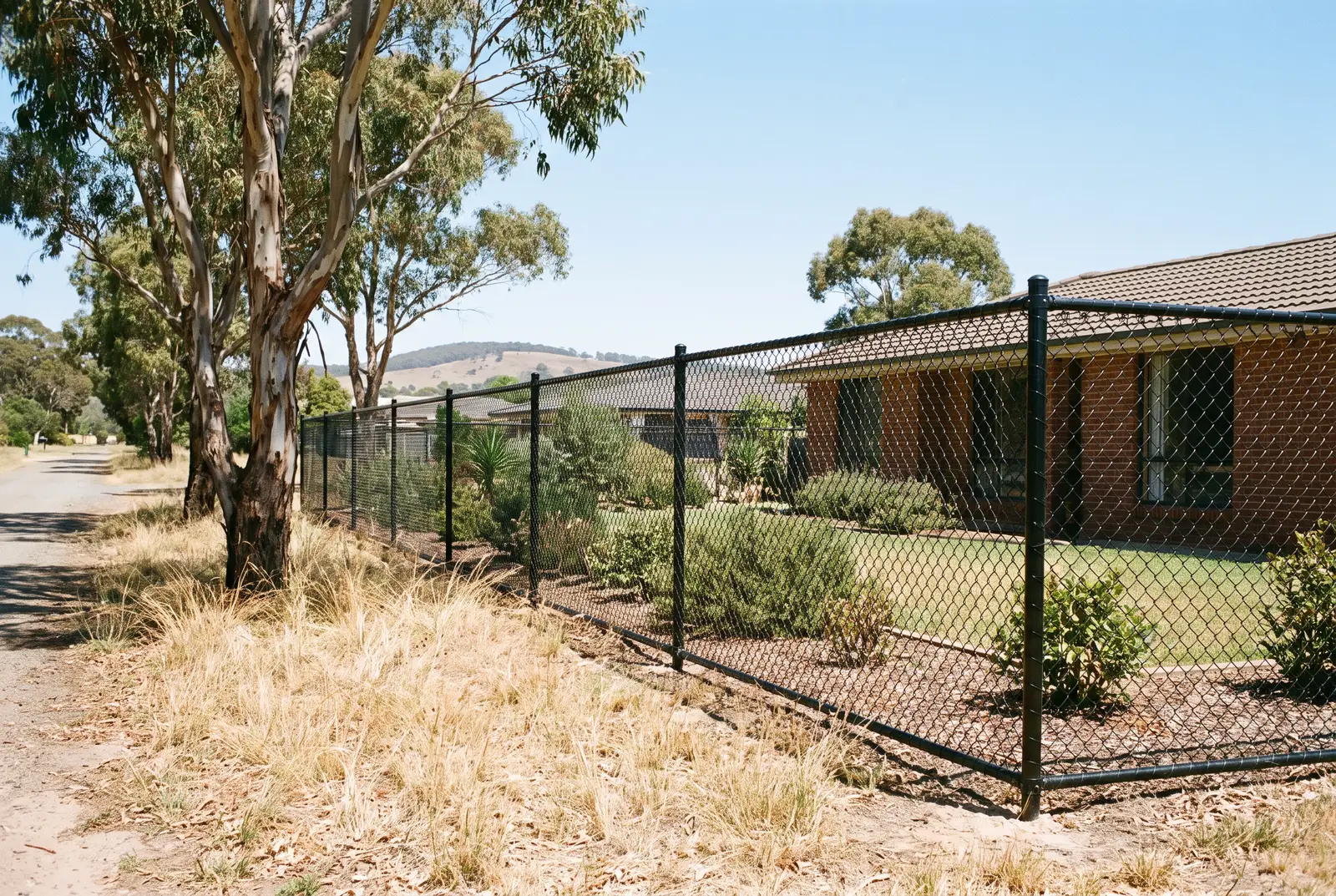
In NSW the dividing fence rules only apply when you ask your neighbour to pay part of the job, and then the process starts with a written Fencing Notice and at least a month's wait before NCAT can be asked to step in.
If you want your neighbour to pay part of a new, replaced or repaired boundary fence in NSW, the law sets a first step: a written Fencing Notice. If you don't ask for money, the Dividing Fences Act 1991 isn't used at all. If you do ask, you must serve a Fencing Notice and wait at least one month before applying to NCAT. On cost, the Act's general principle is that neighbours contribute equally to a dividing fence of a sufficient standard, and an owner who wants a higher standard pays the extra.
That's the short answer. Here is how it plays out for a Newcastle or Hunter homeowner looking at a tired fence line. At Aardvark Chainwire Fencing we build fences. We don't run legal cases, so treat this as a plain map of the process and read the official pages linked throughout for the detail.
The Act applies when one landowner wants the neighbour to contribute to the costs of constructing, replacing, repairing or maintaining a dividing fence. That is the trigger. An old fence doesn't trigger it, and neither does an ugly one. Asking your neighbour to pay does.
The flip side matters too. If you pay for the whole job and never ask your neighbour to chip in, the Act won't be available, because no fencing notice is ever issued. Plenty of fence jobs happen this way.
"Dividing fence" is also broader than you might think. It includes structures separating adjoining land, whether or not they sit on the common boundary.
Paying for the lot yourself keeps you out of the Act, but other rules still apply. Council approval, heritage rules and covenants still count, and they're covered further down.
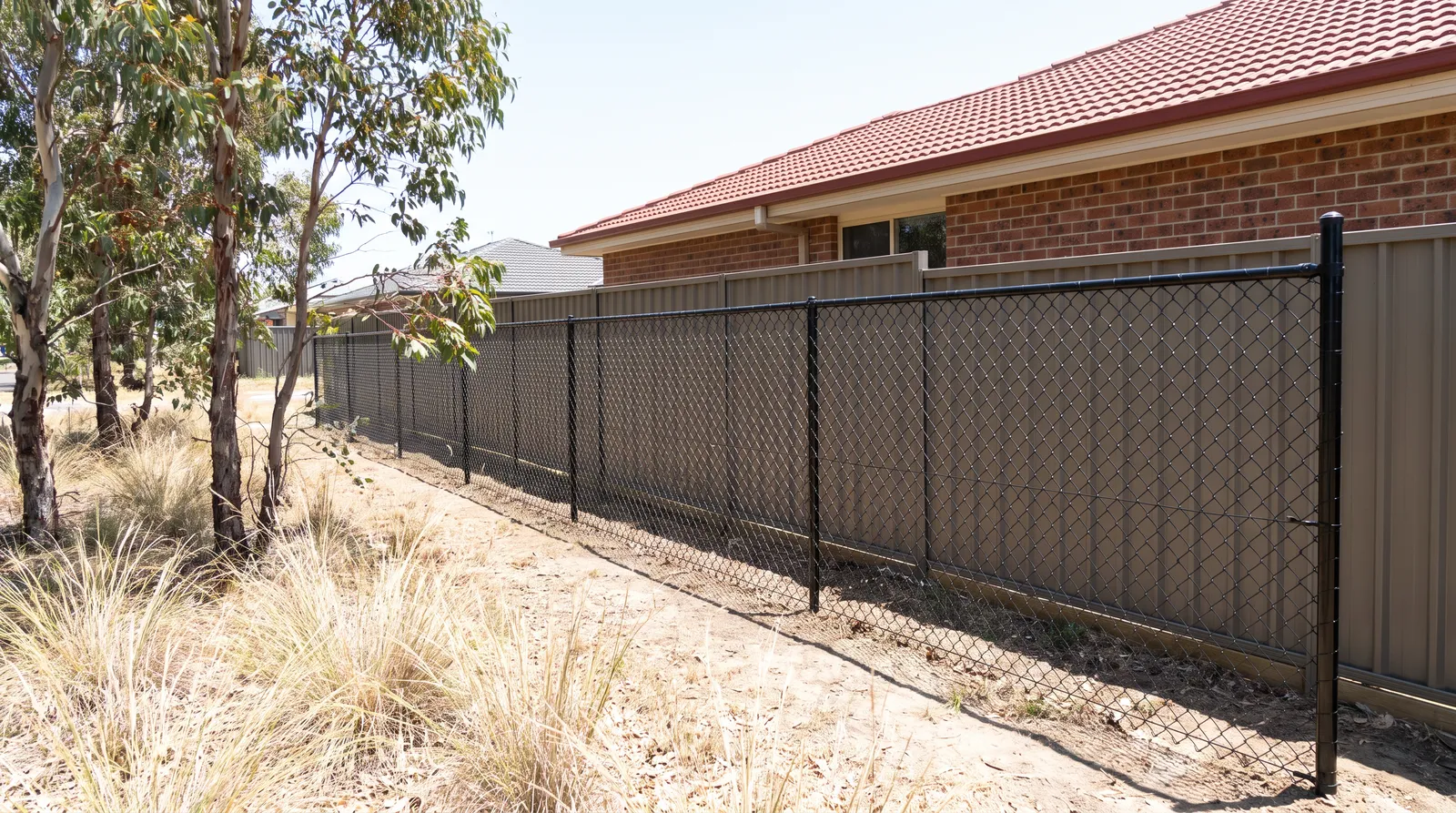
The first step is a Fencing Notice. NCAT's page is plain about the order of events. The landowner must serve the neighbour a Fencing Notice, and must wait at least one month, before applying to NCAT. When an application is made, the notice itself must be attached to it. One exception: if a fence is damaged or destroyed and needs urgent work, the owner can do that work without a notice first where serving one is impracticable. The neighbour is still liable for half the cost, and the Tribunal or Local Court can review it later.
Read that month as a minimum, not a deadline. In our view it's best used for the conversation you'd want to have anyway: what fence, where, and who pays for what. If you can't agree, the State Library notes you can try mediation at a Community Justice Centre, or after the month either neighbour can apply to the Local Court or NCAT.
No request for money, no Fencing Notice. No Fencing Notice, no NCAT.
There is no standard format for a Fencing Notice, but section 11 of the Act says it must specify the boundary line (or, if that's impracticable, the line of the proposed fence), the type of fencing work proposed, the estimated cost and, if the cost isn't to be shared equally, the share proposed. A few other details aren't set out on either official page:
NCAT's dividing fences page links its current application fees. For service and timing, LawAccess NSW, the free government legal information line listed on the State Library's dividing fences guide, is on 1300 888 529. Read both pages before you put pen to paper.
One habit costs nothing. Write down the date you served the notice and how you did it, and keep a copy of exactly what you sent.
NCAT can hear and decide disputes between neighbours about the fence separating their properties. Its orders can cover what the fence is made of, how high it is and how the costs are split.
If a dispute goes that far, NCAT says to gather your evidence, and lists relevant information including:
Most of that is easy to gather at the start and hard to recreate later. Photograph the old fence before anyone pulls a post out. Keep every receipt in one folder. If you already hold a survey of the boundary, find it now rather than the week you need it.
| What can limit the fence | What it can affect | Where to check |
|---|---|---|
| Council policy | The fence's style; some fences need council approval | Your local council State Library of NSW |
| Heritage protection | The fence's style | Your local council State Library of NSW |
| Restrictive covenants on a subdivision | The fence's style | Your property title and your local council State Library of NSW |
| Bush fire prone land (RFS guidance) | Fences should be hardwood or non-combustible, with tighter requirements within 6 m of a building | NSW RFS Planning for Bush Fire Protection
Planning for Bush Fire Protection 2019 RFS update page |
Yes, and it's worth checking before you and your neighbour shake hands on a style. Limits on a dividing fence's style can come from council policy, heritage protection or a subdivision's restrictive covenants. Some fences need council approval, so the State Library's advice is to check with your local council.
If your block is on bush fire prone land, there's another layer. In its chapter on residential infill development, the RFS's Planning for Bush Fire Protection 2019 says all fences in bush fire prone areas "should be made of either hardwood or non-combustible material", and non-combustible only within 6 m of a building or at BAL-29 or higher. PBP 2019 is still the legislated version. The RFS exhibited a draft PBP 2026 from 6 August to 3 September 2026 and says the draft can't be relied on until it is published.
The order matters. Check first, then agree on a style. A fence you've both agreed to is no use if council, a heritage listing or a covenant rules it out.
Step five is where we come in. Aardvark Chainwire Fencing builds chainwire, security and boundary fencing across Newcastle and the Hunter. You might be sharing the job with a neighbour or paying for it yourself. Either way, send us the details through our enquiry form and we'll talk through the fence. The notice and anything that goes to the tribunal stay between you, your neighbour and the official sources above.
Tell us what is going on the boundary, how long it runs and what it has to do, and we will quote the job.
Get a Quote