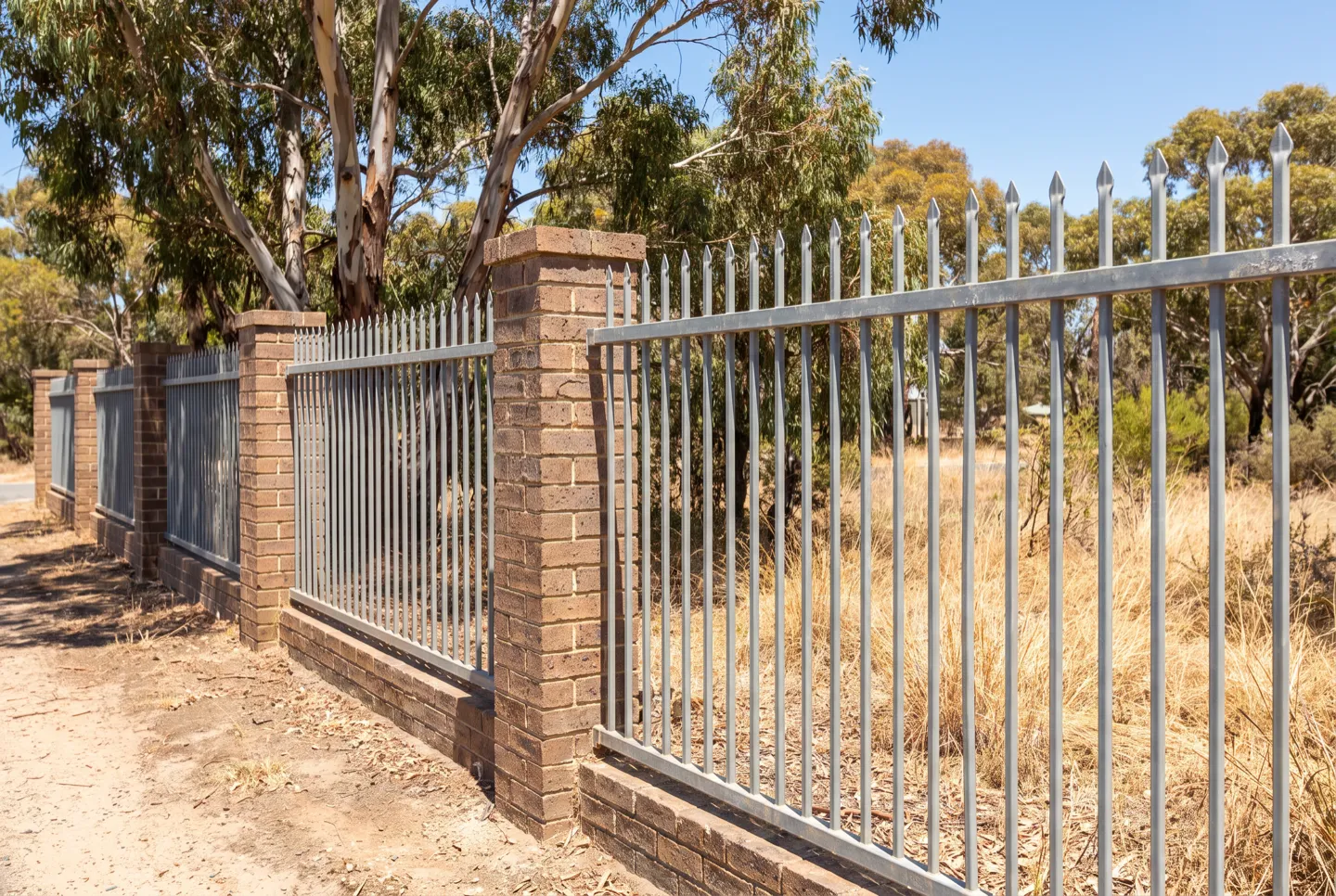
A NSW pool barrier must be at least 1.2m high, with gaps no wider than 10cm, a clear 90cm non-climbable zone and gates that swing outwards, close themselves and latch, and it must be 1.8m high wherever a boundary fence forms part of it.
Most spring pool fence problems are small. A gate that no longer clicks shut. A pot plant that has crept up against the mesh. A shrub with one branch over the top. Each one matters, because the NSW Government notes that drowning in swimming pools is a leading cause of preventable death in children under 5 (Owning a pool or spa: your obligations).
The short answer for NSW: the barrier must be at least 1.2m high from finished ground level, with gaps no wider than 10cm. Nothing climbable may sit within a 90cm zone. Gates must swing outwards, shut by themselves and latch. Where a boundary fence forms part of the barrier, it must be 1.8m (your obligations). The rest of this page is how to check each of those before the first swim.
The rules apply to pools and spas on sites with a residential building, movable dwelling or tourist and visitor accommodation. They cover any pool or spa that can hold water deeper than 30cm (Owning a pool or spa). That includes the inflatable pool that comes out of the shed each December. Portable and inflatable pools that can hold 30cm or more need the same child-resistant barrier as a permanent pool, and portable pools over 2,000L may also need development approval (your obligations).
Take a tape measure and check four things (Owning a pool or spa):
This is the spring job that catches most yards out. Nothing climbable may sit within 90cm, measured as an arc from the top of the fence towards the ground. That covers trees, shrubs, barbecues, pot plants, toys, ladders and chairs (your obligations).
The zone also runs 30cm inside the pool area, which must be clear of footholds and handholds (Owning a pool or spa).
Spring growth is fast. A shrub that was a hand's width clear in autumn can be touching the fence by October. Trim it back, move the outdoor setting and pots, and put the ladder away somewhere other than against the pool fence.
A gate is the part of the barrier that moves, so it is the part that fails. Pool gates must never be propped open. They must swing outwards, away from the pool, shut automatically from any open position and self-latch (your obligations).
Test it properly. Open the gate fully and let go. Then open it a hand's width and let go. It should close and latch from both. If it stops short or bounces off the latch, it needs attention before summer.
Two maintenance habits help: keep bolts, screws and fasteners tight, and spray self-closing hinges, locks and latches with lubricating oil or silicone (Owning a pool or spa).
One older arrangement is gone: doors and windows can no longer form part of a pool barrier (your obligations).
| Situation | Rule |
|---|---|
| Pool barrier | At least 1.2m high from finished ground level |
| Boundary fence forming part of the pool barrier | Barrier must be 1.8m high |
| Perforated or mesh barrier at 1.2m fence height | Holes no greater than 13mm |
| Bottom gap and vertical-bar gap: no more than 10cm. | |
Plenty of backyards use the back or side boundary fence as one wall of the pool enclosure. That is allowed, but the bar is higher: if a boundary fence forms part of the pool barrier, the barrier must be 1.8m high (Owning a pool or spa).
Mesh has its own limit. Perforated or mesh barriers must have holes no greater than 13mm at a 1.2m fence height (your obligations). The same page sets a separate rule for 1.8m barriers with larger holes, up to 100mm. Read that rule on the page itself and have your certifier confirm how it applies to your fence.
At Aardvark Chainwire Fencing our view is simple. Any fence that is going to form part of a pool barrier, chainwire included, should be checked against the standard by your council or a registered certifier before work starts, not after. Height, hole size and what sits on either side all count, and the certifier is the one who signs off.
A shared boundary fence also brings in your neighbour. If you want them to contribute to building or replacing a dividing fence, the Dividing Fences Act 1991 applies (Dividing fences), and some fences need council approval, so check with your local council (Dividing fences). Our earlier guide, Who pays for a dividing fence in NSW, walks through the Fencing Notice that comes first.
The Australian Standard that may apply to your barrier depends on when the pool was built (Owning a pool or spa):
An older fence is not grandfathered once you change it: renovating or altering a pool barrier, including as part of house and yard renovations, brings in the current Act, the Swimming Pools Regulation 2018 and AS1926.1-2012, and previous exemptions cease (your obligations). Replacing one panel of the old fence or moving a gate is worth raising with a certifier before you start.
There is also a newer edition. Standards Australia published AS 1926.1:2024, which it says clarifies definitions and diagrams and gives more detail on non-climbable zones (Standards spotlight: AS 1926.1:2024). The NSW Government page, updated in March 2026, still names AS1926.1-2012 for pools built after 1 May 2013 (Owning a pool or spa). Ask your council or certifier which edition applies to your pool and your planned work.
| Registered | Certificate of compliance |
|---|---|
| Every pool and spa owner must register on the NSW Swimming Pool Register | Issued by a council or a registered certifier after inspection |
| Registration is against the property address | Valid for 3 years |
| No account needed | A certifier registered only as a "swimming pool inspector" cannot certify a pool built to a performance solution |
| Council can register for you for a small fee | Some certifiers may do minor repairs of up to $1,000 (labour and materials) so they can issue it |
All pool and spa owners must register on the NSW Swimming Pool Register. Registration is against the property address, you don't need an account, and the council can register on your behalf for a small fee (your obligations).
Registering your pool does not make it compliant: compliance is assessed separately, by an inspection from the council or a registered certifier (Owning a pool or spa).
A certificate of compliance is valid for 3 years. Your council or a registered swimming pool inspector (certifier) can inspect the barrier and issue it. If your pool was built to a performance solution rather than the standard's set measurements, a certifier registered only as a "swimming pool inspector" cannot certify it; your council or a building surveyor can. Some certifiers may do minor repairs of up to $1,000, labour and materials, so they can issue the certificate (your obligations).
Councils enforce barrier compliance, investigate complaints and can direct owners to fix problems (Owning a pool or spa).
Check the CPR sign while you are out there. It must be displayed near the pool, portable pools included, in good condition and readable from 3m away. Signs updated from 1 September 2019 are required for new pools, and existing pools only need the new sign if the barrier is substantially altered or rebuilt (your obligations). A sun-faded sign after a few summers is an easy fix to miss.
If a sale or a lease is on the cards, the paperwork has deadlines.
Selling. The contract must include a registration certificate plus one of three documents: an occupation certificate issued within the last 3 years, a valid certificate of compliance, or a certificate of non-compliance. If one is missing, the purchaser may rescind within 14 days of exchange unless settlement has occurred. With a non-compliance certificate, the buyer has 90 days from settlement to fix the defects and get compliance, unless the pool poses a significant risk to public safety (Owning a pool or spa).
Renting. The landlord or agent must give the tenant a copy of the certificate of compliance or occupation certificate. A non-compliance certificate cannot be used to rent a property (your obligations).
These sale and rental rules don't apply to a lot in a strata or community scheme of more than 2 lots, or to an off-the-plan sale (Owning a pool or spa).
Pin this up, or keep it on your phone for the walk around the fence. Every figure comes from the NSW Government's owner obligations page (Owning a pool or spa). If any line fails, sort it before the pool is used again, and don't forget the supervision side: pool owners must keep the pool area safe and make sure children are supervised (your obligations).
Start with the inspection. Your council or a registered certifier can tell you which standard applies, what fails and what needs fixing. For the work itself, that means a licensed builder, a pool technician or a fencing contractor, depending on the job.
If the fix involves chainwire, security or boundary fencing in Newcastle or the Hunter, tell Aardvark Chainwire Fencing what your certifier or council has said and what you need through our contact page. You can also browse our fencing services first.
Tell us what your certifier or council has said and what the fence needs, and we will talk it through.
Get a Quote