The NSW Swimming Pool Register now records a pool against the property's address rather than the owner's name, and a registration certificate does not show the pool barrier complies: only an inspection by the council or a registered certifier settles that.
The NSW Swimming Pool Register now files your pool under the property's address, not your name. For anyone who has recently bought a home with a pool, the first step is a search by address. What it has never done is tell anyone your pool fence is safe. That still takes an inspection.
Here is the working that makes spring a sensible time to act. A certificate of compliance is valid for 3 years. A sale contract can carry a valid certificate of compliance. A landlord must give the tenant a copy of the certificate of compliance or occupation certificate. On our estimate, a certificate issued in October 2026 would run out around October 2029 (the issue date plus 3 years). So one inspection now could cover a sale or a new lease until then.
The updated register launched on 16 March 2026. The change owners will notice is this: pools and spas are no longer registered under an owner's personal details. Instead, registration is based on the property address only, because the pool or spa belongs with the property rather than the person who owns it.
In plain terms, the record stays put when the house changes hands. That is why the NSW Government tells anyone who has recently bought a property with a pool to search the register by address.
The stated aim is a "single source of truth" for NSW pool registrations and compliance status. Councils and certifiers get role-based access meant to cut duplicate records. On their side, existing council and certifier account holders did not need new accounts.
Three steps, in that order. The first two are quick. The third is the one that matters for safety, and it needs booking ahead.
Search the register for your property address. If it is registered, the Certificate of Registration and the Certificate of Compliance or Non-Compliance can be viewed there. For help with the new screens, the NSW Government publishes a Swimming Pool Register user guide for pool and spa owners.
All swimming pool and spa owners must register their pool or spa on the register. A first registration asks for the address and some basic property details. You need no account and give no personal details. If you would rather hand it over, owners can ask their local council to register it for a small fee.
Registering a pool does not mean it is compliant: compliance is assessed separately by an inspection from the local council or a registered certifier.
Councils and registered certifiers inspect a pool or spa before sale or lease at the owner's request. The same page advises contacting them early to leave time. Spring is when everyone remembers their pool, so we would book before the weather warms up properly.
Some certifiers can do minor repairs of up to $1,000 (labour and materials) (checked October 2026) so a compliance certificate can be issued. The owner is free to hire another tradesperson instead.
| Question | Selling | Renting |
|---|---|---|
| What must be provided | Swimming Pool Register registration certificate, plus one of: occupation certificate issued within the last 3 years, valid certificate of compliance, or certificate of non-compliance | Copy of the certificate of compliance or occupation certificate, given to the tenant |
| Certificate of non-compliance | Allowed; buyer has 90 days from settlement to fix defects and get a certificate of compliance, unless the certificate says the pool poses a significant risk to public safety | Cannot be used to rent the property |
| If no certificate is included | Buyer may rescind within 14 days of exchange, unless settlement has already occurred | No entry |
| Excluded | Strata and community schemes of more than 2 lots, and off-the-plan sales (90-day rule) | Strata and community schemes of more than 2 lots |
Selling. The contract must include a Swimming Pool Register registration certificate. It must also include one of three documents:
If none is included, the buyer may rescind within 14 days of exchange, unless settlement has already occurred.
Buying. If a non-compliance certificate is attached, the buyer has 90 days from settlement to fix the defects and get a certificate of compliance. That does not apply where the certificate says the pool poses a significant risk to public safety. Strata and community schemes of more than 2 lots, and off-the-plan sales, are excluded from this rule. The first job after settlement is the address search, so you can see exactly which certificate came with the house.
Renting. The landlord or agent must give the tenant the certificate of compliance or occupation certificate, and a certificate of non-compliance cannot be used to rent a property. Strata and community schemes of more than 2 lots are excluded.
Notice the gap between the two. A seller can list with a non-compliance certificate and pass the fix to the buyer. A landlord cannot lease on one at all.
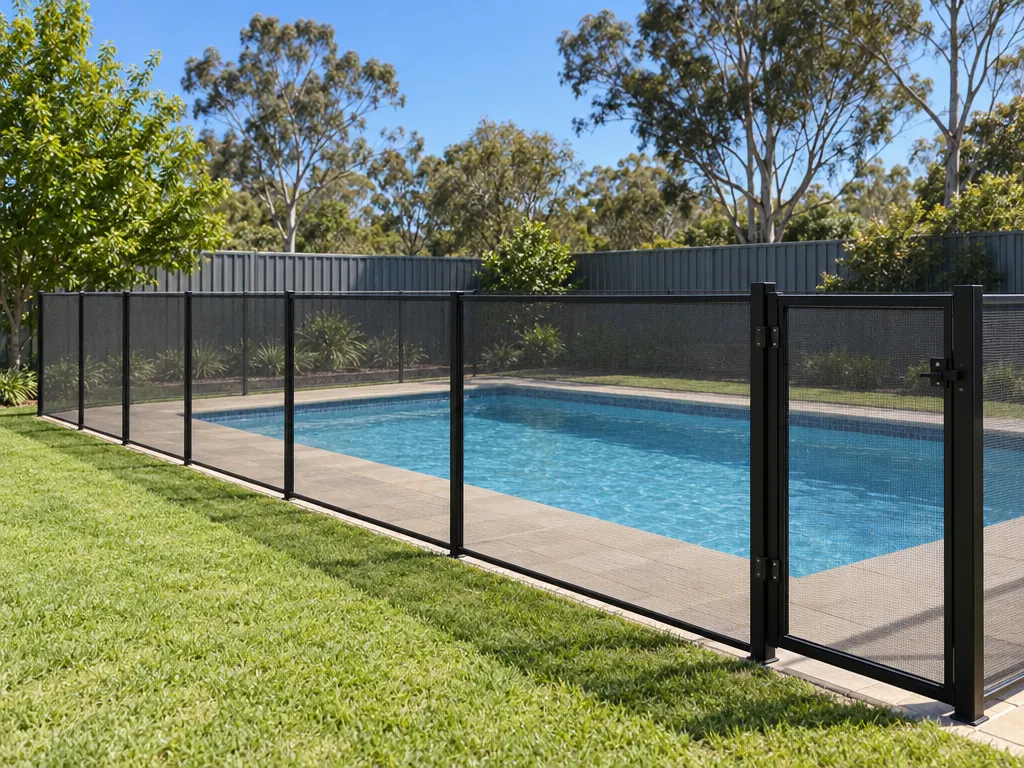
The inspection looks at the barrier, which is where fencing comes in. The NSW page sets out the figures. The barrier must be at least 1.2 m high, with a bottom gap of no more than 10 cm, and a boundary fence that forms part of the barrier must be 1.8 m high. The same page sets these limits:
If your barrier is mesh, measure the openings against those limits rather than assuming. The certifier or council makes the call, not the fence's description.
Which version of AS 1926 applies depends on age: the page names the 1986, 2007 and 2012 versions, depending on when the pool was built. That changes the moment you touch the barrier. If a barrier is modified or altered (including house and yard renovations), the current Act, the Regulation 2018 and AS1926.1-2012 apply and earlier exemptions cease.
Gates must never be propped open. They must swing outwards, self-close from any open position and self-latch. A CPR sign must be readable from 3 m. Owners of existing pools need not update older signs unless the barrier is substantially altered or rebuilt.
67% of toddler drownings happen in swimming pools
The reason this matters: children aged 0 to 4 are the most at-risk age group, and 67% of toddler drownings happen in swimming pools, figures the NSW Government credits to Kidsafe.
We covered gates, latches and the non-climbable zone in full in NSW pool fence rules: the spring check for your barrier, gate and boundary fence. If a shared boundary fence forms part of your barrier, the neighbour side of it is in Who pays for a dividing fence in NSW.
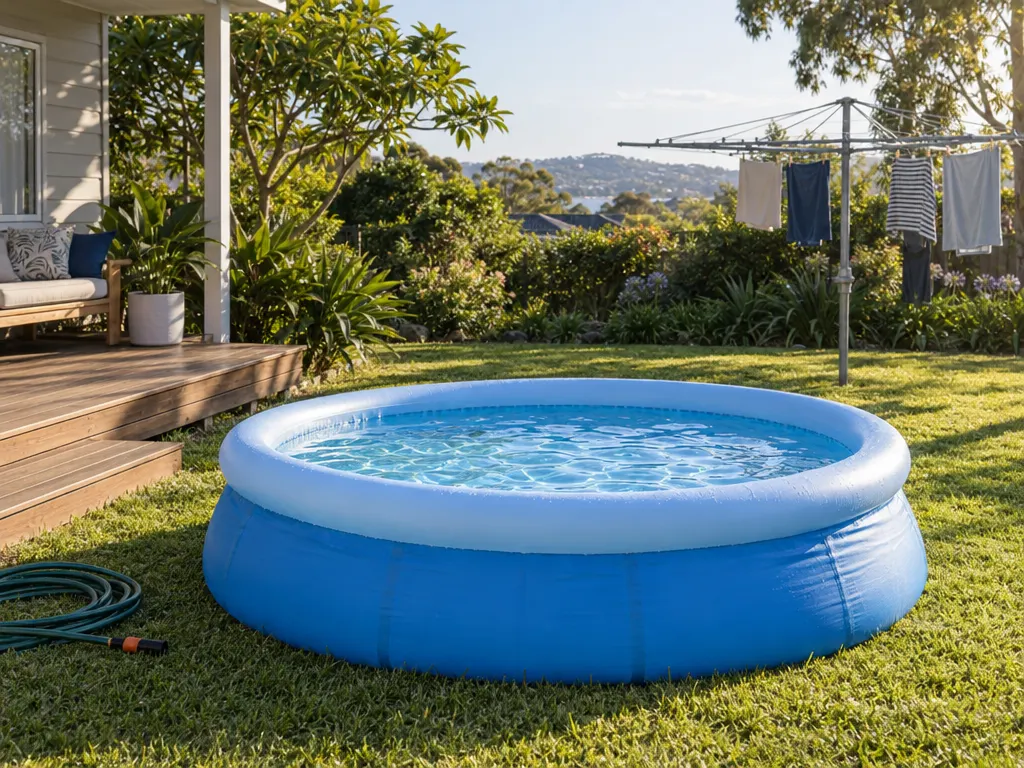
Portable and inflatable pools are not exempt: anything that can hold more than 30 cm of water is covered by the same fencing and safety rules.
Size can add a planning step too. Pools over 2,000 L may also need development approval, so check with your council before you fill a big one.
In a unit block or community scheme, the owners corporation is responsible for pool compliance on common property.
Fence figures as set out on the NSW page; older pools may be assessed against an earlier AS 1926.
Most of these numbers come into play only when you sell, lease or change the barrier. The 3-year life of a certificate of compliance is the one to diary.
Search your address on the register today. If the pool isn't listed, register it. Then book an inspection with your council or a registered certifier early, before the spring rush.
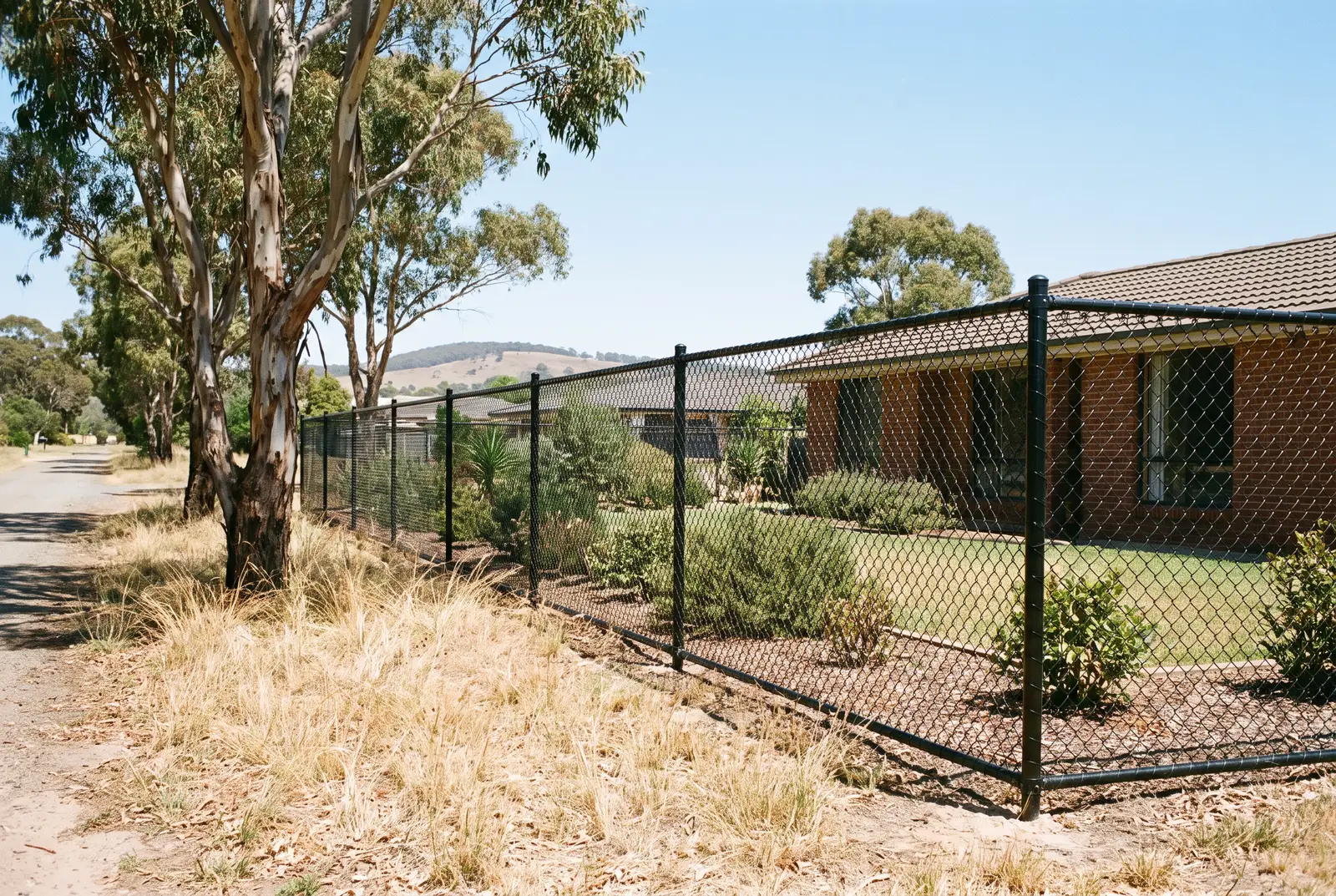
If the inspection report points at the fence, Aardvark Chainwire Fencing can help. We work on chainwire, security and boundary fencing across Newcastle and the Hunter. Tell us what the report says, along with the barrier's height and the ground around it, through our contact page. The council or certifier still decides whether the finished barrier complies.
Pictures in this guide are illustrations, not photos of our jobs.