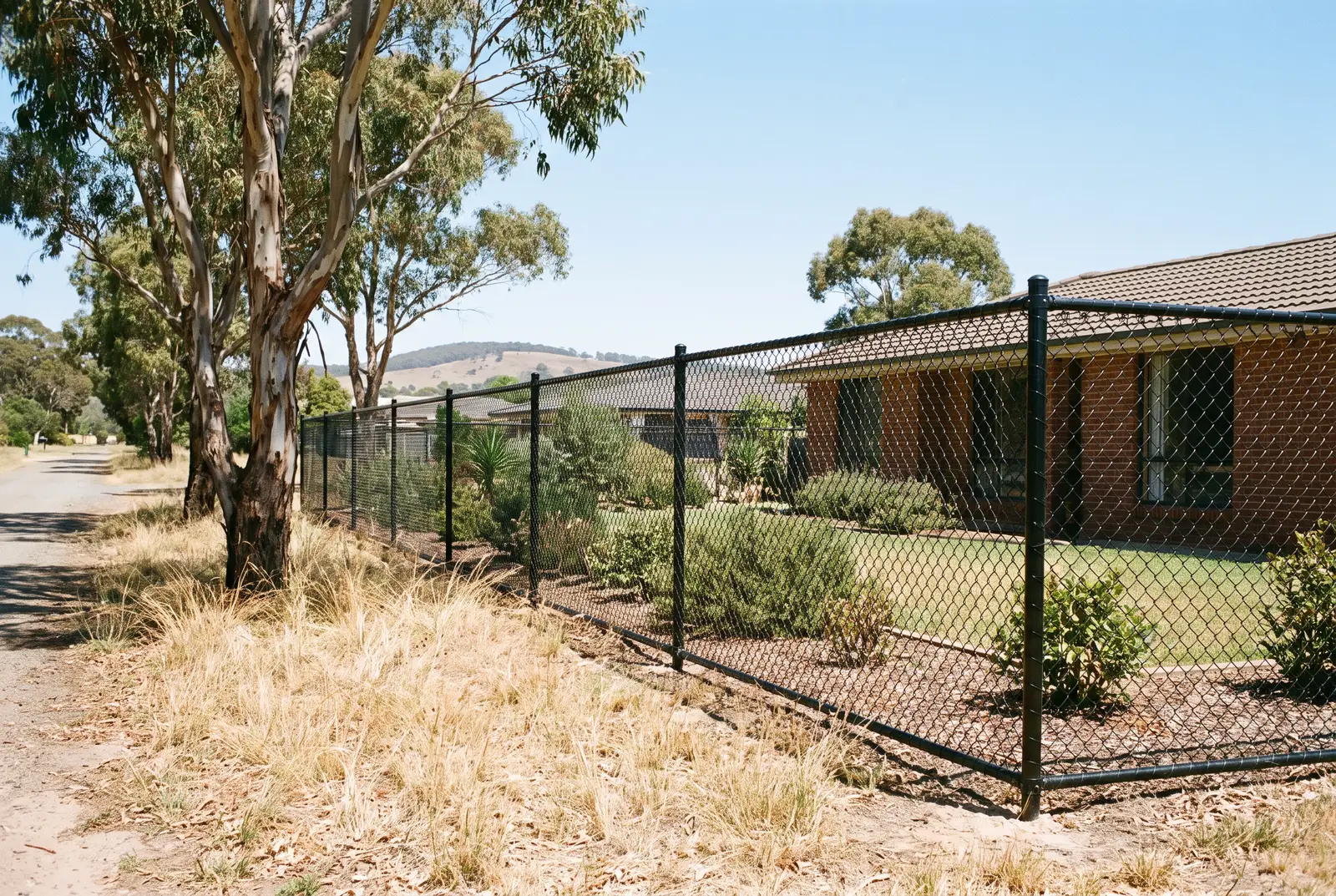
Which pool standard a NSW barrier is assessed against depends on when the pool was built, unless the barrier has since been modified or altered, and as at the Building Commission's notice to certifiers, the newest edition is not one councils or certifiers may use to assess it.
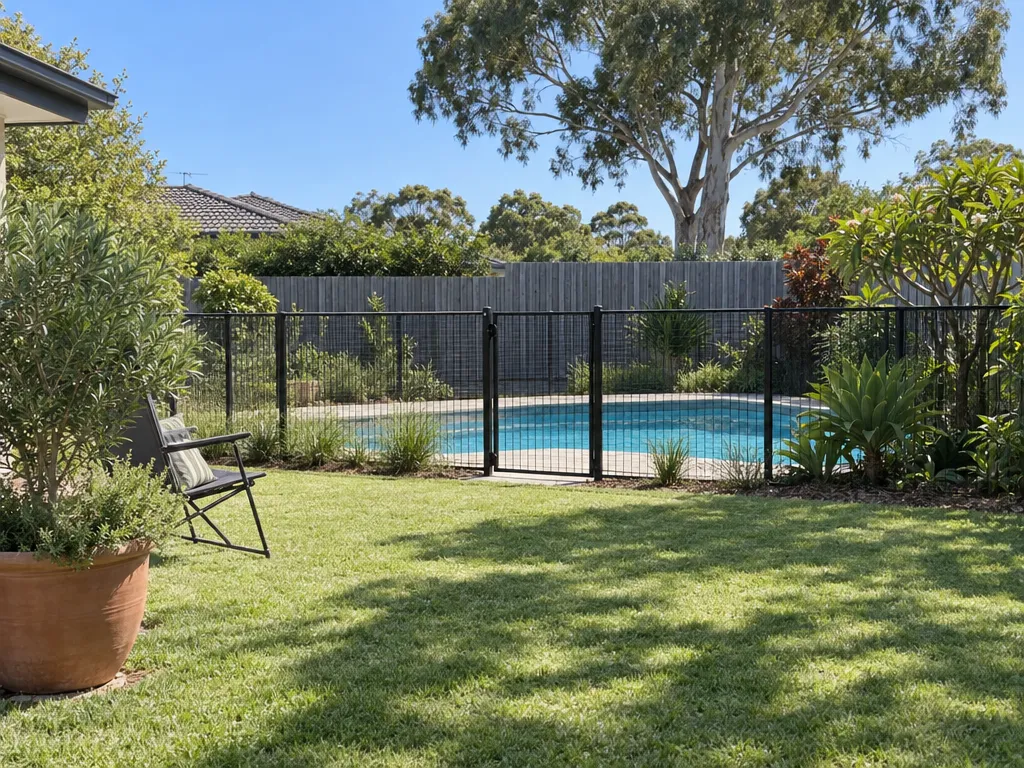
Three editions of the Australian pool barrier standard can apply to a NSW backyard today. Which one is yours depends mainly on when the pool was built, and also on where it sits and whether the barrier has changed since. The NSW Government's owner-obligations page sets out the ladder:
So there are three possible yardsticks, set by your pool's age, and one rule that can override all of them. If the barrier is modified or altered, the same page says the current Act, Regulation and AS 1926.1-2012 apply and "previous exemptions cease". The section on resets below explains what counts.
A fourth edition is the one in the news. As at its October 2025 notice to certifiers, the Building Commission says AS 1926.1:2024 is not in force in NSW and must not be used to assess a pool barrier (Building Commission NSW, News for certifiers, October 2025).
That makes the summer question simpler than the headlines suggest. You don't need to measure your fence against the newest edition. You need to know which of the three your pool falls under, and whether anything about the barrier has changed since it was built. At Aardvark Chainwire Fencing, our advice is to find that build date first, before anyone touches the fence. If you're unsure of it, your council or a registered certifier can tell you which standard they'll assess against.
The rules reach further than in-ground pools. The Swimming Pools Act 1992 applies to any pool or spa that can hold water deeper than 30 cm on a site with a residential building, movable dwelling or tourist accommodation. Portable pools over 30 cm are covered too, and pools over 2,000 L may also need development approval.
The change has a date, but not yet a rule for your existing pool. NSW will adopt NCC 2025 on 1 May 2027, the NSW Government announced on 25 March 2026. Until then, the Building Commission lists the current code as NCC 2022 Amendment 2, and NSW plans its own variations to the new one. By our count, the adoption date is about six months from November 2026 (our estimate: November to May).
The industry body SPASA says NCC 2025 adopts the 2024 version of AS 1926.1. It adds that a variation keeps a 500 mm limit for features near boundary barriers, one that "previously only applied in NSW".
What the 2024 edition changes, according to Standards Australia:
At least one council is already talking about it. Penrith City Council, in Sydney's west, says AS1926.1-2024 "is expected to become the current standard by 1 May 2027". It also says council "may no longer uphold previous safety standards where AS1926.1-2024 applies". That is one council's expectation, not a settled statewide rule for existing pools.
Penrith's practical tip is a sound one wherever you live: check your gate, latch, height and non-climbable zone now. Gates, latches and the non-climbable zone are where Standards Australia's listed changes sit, and all four are worth checking under any edition.
Source: NSW Government
The stakes are small children. The NSW Government says children aged 0 to 4 are most at risk, and, citing Kidsafe, that 67% of toddler drownings happen in swimming pools. It takes only "20 seconds and a few centimetres of water".
Our spring check for your barrier, gate and boundary fence walks through each measurement. Here is the short version from the NSW owner-obligations page.
Height and gaps. The fence must be at least 1.2 m high, with a bottom gap no more than 10 cm. Gaps between vertical bars must be no more than 10 cm. Horizontal climbable bars must be at least 90 cm apart.
Mesh openings. This is the line to read twice if your barrier is wire mesh, chainwire included. Mesh or perforated barriers need holes no greater than 13 mm at 1.2 m height. For 1.8 m barriers with holes over 13 mm, the page says they "must not exceed 100mm". Measure your own openings and compare them. If you're unsure how your mesh is assessed, ask the certifier before you book repairs.
Boundary fences. A boundary fence that forms part of the pool barrier must be 1.8 m. That fence is usually shared with a neighbour, but the usual 50/50 split does not cover the pool part: the pool owner will usually pay for the section of a dividing fence that also serves as the pool barrier. Our guide to who pays for a dividing fence covers the rest of the boundary. Legal Aid NSW says the owner of the swimming pool "will usually have to pay the costs of the section of the dividing fence that is also part of the swimming pool fence". NSW storm season falls between September and April, so look along that boundary section after each big blow.
The non-climbable zone. It is 90 cm, measured in an arc from the top of the fence, and it also extends 30 cm inside the pool area. Trees, shrubs, barbecues, pot plants, toys, ladders and chairs must stay out of it. Summer is when the outdoor furniture creeps back towards the fence.
The gate. Gates must never be propped open. They must swing outward, away from the pool, self-close from any open position and self-latch. Test the gate from half-open and from fully open, not just from a gentle push. Doors and windows as part of a barrier are "no longer allowed".
The CPR sign. It must be readable from 3 m. Signs from 1 Sep 2019 are required for new pools. Existing pools only need to update if the barrier is substantially altered or rebuilt.
"previous exemptions cease"
Work on the barrier can move an older pool onto the current rules. If the barrier is modified or altered, the current Act, Regulation and AS 1926.1-2012 apply, and previous exemptions cease. The same page notes that house and yard renovations may count.
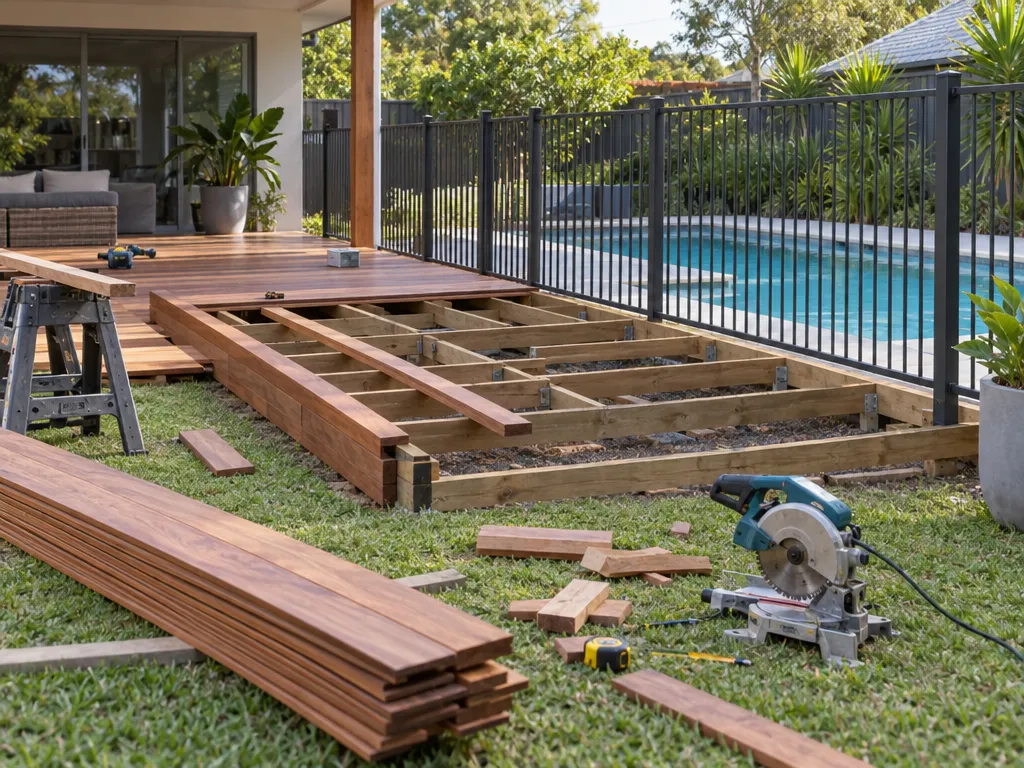
That catches people out. A new deck, a rebuilt boundary fence or a moved gate can bring a 1990s pool under rules it never had to meet. The time to ask council or a registered certifier is before the renovation starts, not after the certificate fails.
One more case needs its own paperwork. If your barrier was built as a performance solution, only certain certifier classes (or council) can inspect it, and a "swimming pool inspector" cannot certify it. Keep the records from when it was approved and every certifier's report since, because the inspector needs to know how the barrier was approved.
| Question | Selling | Renting |
|---|---|---|
| Must include or give | registration certificate plus one of: occupation certificate issued within 3 years, valid certificate of compliance, or certificate of non-compliance | certificate of compliance or occupation certificate |
| Certificate of non-compliance | allowed; buyer has 90 days from settlement to fix defects, unless it states the pool is a significant risk to public safety | cannot be used to rent a property |
| If nothing is attached | buyer may rescind within 14 days of exchange, unless settlement has occurred | No entry |
| Exceptions | strata and community schemes of more than 2 lots, and off-the-plan sales | strata and community schemes of more than 2 lots |
Registration is a separate step, covered in our Swimming Pool Register guide. The register now works by property address only. Selling or leasing is where you also need proof of the barrier.
Selling. The contract must include a registration certificate plus one of three documents: an occupation certificate issued within 3 years, a valid certificate of compliance, or a certificate of non-compliance. If none is attached, the buyer may rescind within 14 days of exchange, unless settlement has occurred. With a non-compliance certificate, the buyer has 90 days from settlement to fix the defects, unless it states the pool is a significant risk to public safety.
Strata and community schemes of more than 2 lots, and off-the-plan sales, are excluded.
Source: NSW GovernmentRenting. The landlord or agent must give the tenant a certificate of compliance or occupation certificate. A non-compliance certificate "cannot be used to rent a property".
Exceptions. Strata and community schemes of more than 2 lots are excepted from the sale and lease rules. Off-the-plan sales are also excluded from the sale rules.
A certificate of compliance is valid for 3 years. If you might sell or lease in that window, an inspection before summer does double duty.
On request, councils and registered certifiers inspect before a sale or lease and issue a certificate of compliance or non-compliance. Councils also run a barrier inspection program and investigate complaints.
City of Newcastle sets out its process plainly:
For a sense of scale elsewhere, Penrith City Council, outside the Hunter, lists an inspection fee of $150 plus $100 per re-inspection (checked November 2026). It also cites fines of $550 for an unfenced pool, $220 for an unregistered pool and $1,500 for no development consent (checked November 2026). Your own council's figures may differ, so ask when you apply.
If the inspection finds a fault, some certifiers may do minor repairs of up to $1,000 (labour and materials) to enable a certificate (checked November 2026). You don't have to take that offer: the owner "is free to hire another tradesperson". For larger fence repairs or a replacement barrier, use a licensed builder or fencing contractor.
These are the figures to keep on the fridge. The standard edition behind them still depends on your pool's age, unless the barrier has been altered.
Start with three things this week: find your pool's build date, walk the checklist above with a tape measure, and clear the 90 cm zone. If you plan to sell or lease, book the inspection early with council or a registered certifier. Only they can issue the certificate.
If your check turns up a sagging boundary section, a damaged mesh panel or a fence line that needs rebuilding, tell Aardvark Chainwire Fencing what you've found through our contact page. We work on chainwire, security and boundary fencing across Newcastle and the Hunter. Ask your certifier how any repair will be assessed before work begins, because a change to the barrier can bring it under the current rules.
Pictures in this guide are illustrations, not photos of our jobs.