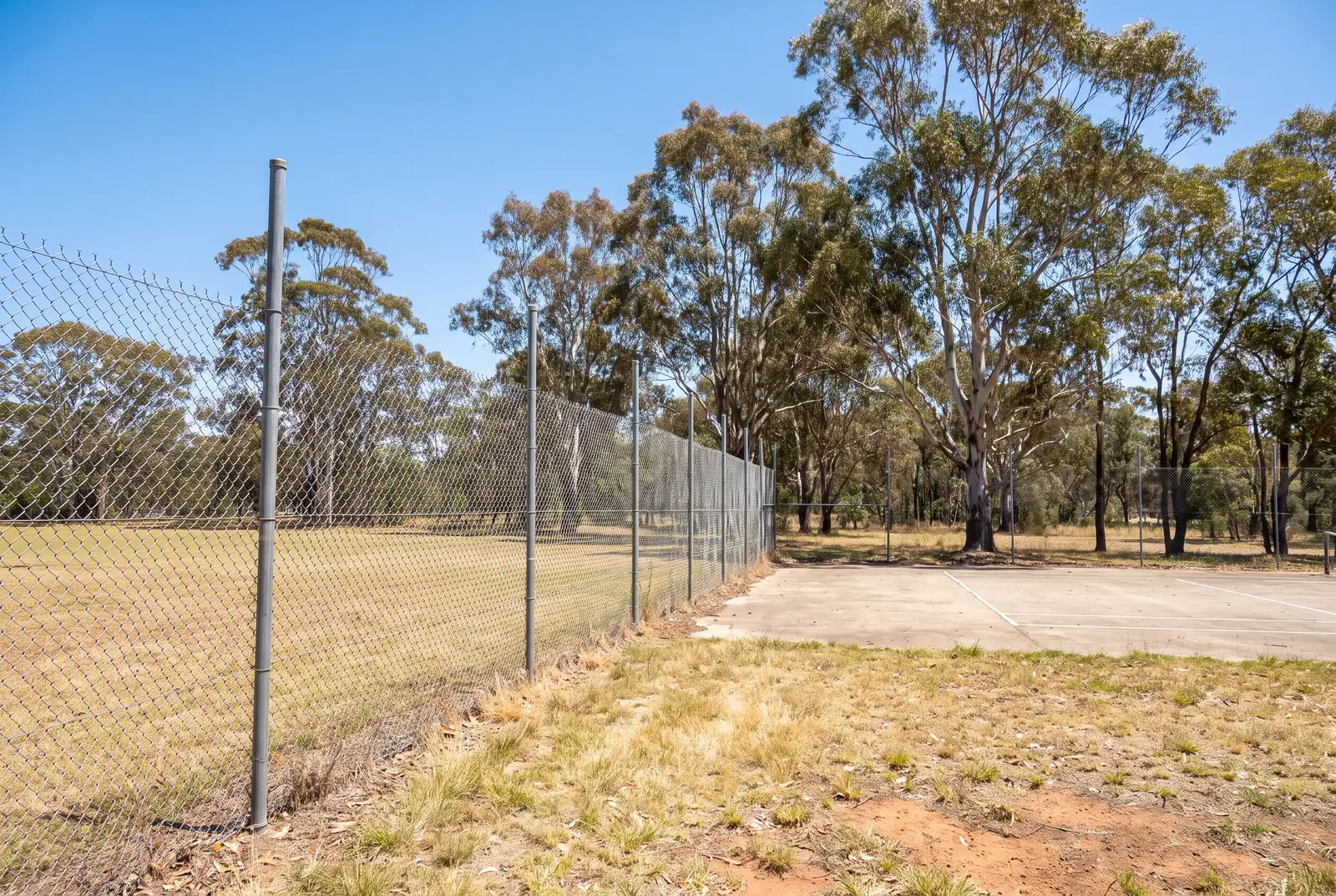
Chain mesh suits boundaries, yards and secure sites where you want to see through the fence and is the wrong pick for privacy, but in NSW your zone, each fence line's height limit and your bushfire status narrow the choice of material before looks or price do.
Choose chain mesh when you want to see through the fence: a boundary, a yard, a shed or a site you need to keep secure. Choose something solid when privacy is the point. Before either, check the rules, because in NSW a good part of the material choice is made for you.
On the NSW Planning Portal's exempt development page for fences, we count six rules that limit what a fence can be made of, how it is finished or how much it must let through. That is our count. We went through the page's general, residential and rural requirements and kept each one that names a material, a finish or a see-through requirement. Zone, height and bushfire status come first. Looks and price come after.
Chainwire, chain mesh and chain link are three names for the same woven wire fence. Here Aardvark Chainwire Fencing compares it with Colorbond sheet steel, timber and welded mesh panels, and shows where each one runs into a rule.
| Rule | Where it applies |
|---|---|
| 1. Fences must be non-combustible or hardwood | Bushfire prone land |
| 2. Metal parts must be low reflective, factory pre-coloured materials | All exempt fences |
| 3. No electric fencing or barbed wire | Residential, industrial and business zones (R5 excepted) |
| 4. Side and rear boundary fences no higher than 1.8 m, or 1.2 m if masonry | Residential zones R1, R2, R3, R4, RU5 |
| 5. At least 20% transparent above 400 mm | Fences along a secondary road, residential zones R1, R2, R3, R4, RU5 |
| 6. Post and wire or post and rail, no higher than 1.8 m | Rural and environmental zones |
| NSW Planning Portal, exempt development: fences (page last updated 20/06/2023) | |
All six come from the NSW exempt development rules for fences, a page last updated in June 2023:
The second rule touches chain mesh and Colorbond alike. If you want the fence built without approval, ask whether the mesh, posts and rails are factory pre-coloured and low reflective before you settle on a finish.
A fence is not free of approval just because it is "only a fence": it is exempt only if it meets the height, material and zone limits, and bushfire-prone land adds the non-combustible-or-hardwood rule.
Some land sits outside the exemption altogether. Land on the State Heritage Register or under an interim heritage order, critical habitat and wilderness areas are generally excluded, and councils may set extra controls in koala habitat.
Most blocks have more than one kind of fence line, and each has its own limit. The side and rear boundaries, the road frontage, a corner block's secondary road and any pool barrier all answer to different numbers.
Gates are where people get caught out. The exempt rules say gates must not open outwards. A pool gate must swing outwards, away from the pool. That means two rules and two directions on the same block.
| Chain mesh | Colorbond sheet steel | Timber | Welded or panel mesh | |
|---|---|---|---|---|
| Privacy | Low, see-through | High, solid sheet | High if closed-boarded | Low, see-through |
| See-through | Yes | No | Only if slatted with gaps | Yes |
| Security and boundary use | Used for boundaries and security; barbed wire not exempt in residential, industrial or business zones (R5 excepted) | Blocks sightlines both ways | Depends on design | Depends on panel and height |
| Upkeep | Ask what coating or finish is specified | Hose at least every six months where not rain-washed, more often near the coast; painting voids the warranty on sheets, posts and rails (BlueScope) | Ask what species and finish are specified | Ask what coating or finish is specified |
| Bushfire behaviour | Not part of the 2005 tests; check against the non-combustible-or-hardwood rule | Manufacturer says it "resists the progress of fire" (manufacturer's claim); the solid steel fence kept its structure in all 2005 tests, though panels buckled and separated at joints | Treated pine "ignited and burnt to completion" in all 2005 tests; open-slatted hardwood was less effective than closed | Not part of the 2005 tests; check against the non-combustible-or-hardwood rule |
| Pool barrier | Mesh holes no greater than 13 mm at 1.2 m; at 1.8 m, holes over 13 mm must not exceed 100 mm | 1.8 m where a boundary fence forms part of the barrier | Vertical gaps no more than 10 cm; climbable horizontal bars at least 90 cm apart | Same mesh hole limits as chain mesh |
| Rules to watch | Metal must be low reflective, factory pre-coloured | Same metal rule; concrete must not touch rails or infill sheets (BlueScope) | Hardwood is the timber named for bushfire prone land | Same metal rule |
No material wins every row. Read the table by the job you need done.
Colorbond sheet steel. BlueScope says its fence "won't rot, it won't be eaten by termites and resists the progress of fire". That is the manufacturer's claim, and it quotes CSIRO's finding that sheet steel performed best in the tests. The same company's Colorbond FAQ sets some conditions:
There is upkeep too. Areas not rain-washed should be hosed at least every six months, and more often in coastal areas, which covers plenty of Newcastle. BlueScope also says warranty periods depend on end use and project location.
Timber. Hardwood is the one timber the bushfire prone land rule names. In fire tests reported in 2005, treated pine "ignited and burnt to completion" in every experiment, and open-slatted hardwood was less effective than closed.
Welded or panel mesh. On the rules, it sits with chain mesh. It is metal, so the low reflective, factory pre-coloured rule applies. It is mesh, so the pool barrier mesh limits apply if it fences a pool.
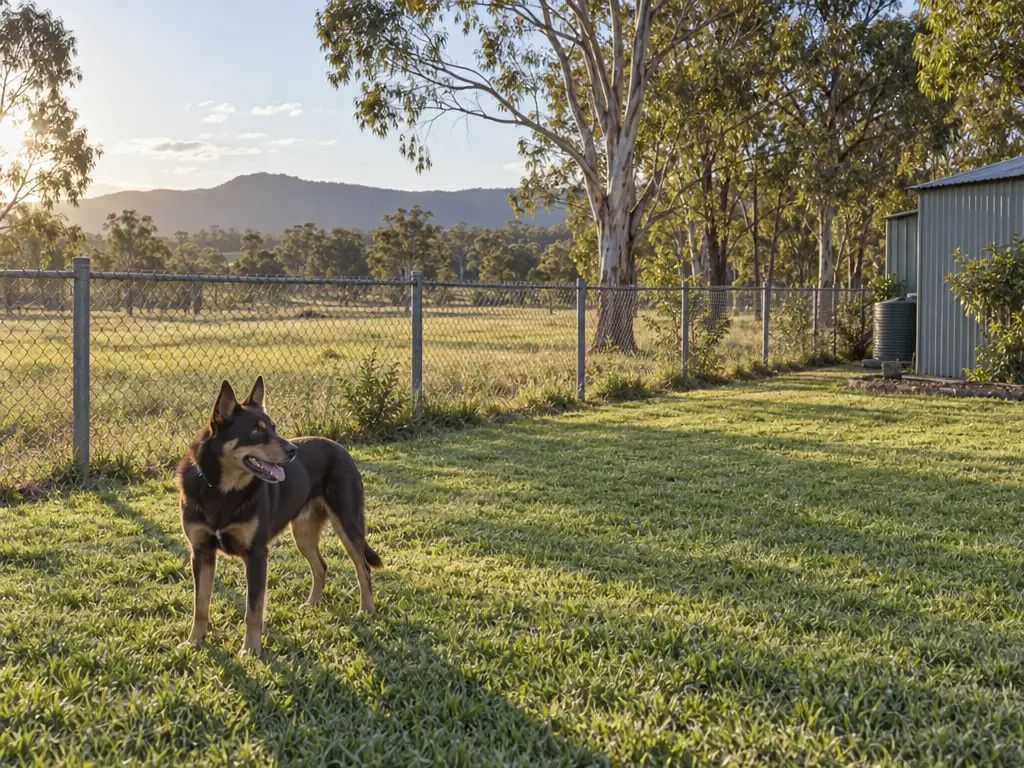
Chain mesh is the fence for keeping something in or out while still seeing through it. You can see who is at the gate, a dog stays in the yard, and the paddock beyond stays in view. At Aardvark Chainwire Fencing we work on chainwire, security and boundary fencing across Newcastle and the Hunter, and that open-sightline job is where chain mesh does its best work.
It also suits a rule that favours see-through fencing. On a residential corner block, a fence along the secondary road must be at least 20% transparent above 400 mm. Mesh lets light and sightlines through by design. A solid sheet above 400 mm has no openings at all.
Chain mesh is the wrong choice in three places:
In residential zones, side and rear boundary fences can be no higher than 1.8 m, or 1.2 m if masonry. On the boundary of a primary or secondary road, or in its setback, the limit is 1.2 m. Rural and environmental zones allow 1.8 m. Business and industrial zones allow three metres, or 1.2 m if masonry.
Now put two pages side by side. A pool barrier must be at least 1.2 m high, or 1.8 m if a boundary fence forms part of it. If that boundary fence is also meant to stay exempt, the two numbers meet: at least 1.8 m for the pool and no higher than 1.8 m for the exemption leaves exactly 1.8 m. That is our reading of two separate pages, not a ruling. Confirm it with your council or a certifier before you build.
The NSW limits for mesh or perforated pool barriers are specific:
Check any mesh against these limits before assuming it suits a pool. Compliance is decided by an inspection from the council or a registered certifier, not by the fence supplier.
The pool barrier standard has also moved on. Standards Australia's 2024 edition changed guidance on objects and plants in non-climbable zones and updated gate latch and hinge requirements, but the NSW pool page still lists the 1986, 2007 and 2012 editions, depending on when the pool was built, so ask your certifier which one applies to your pool. Our spring pool fence check covers the rest of the barrier and gate.
On bushfire prone land, an exempt fence must be non-combustible or hardwood. The current legislated guideline is Planning for Bush Fire Protection 2019, adopted 1 March 2020. A draft PBP 2026 was exhibited from 6 August to 3 September 2026, and the RFS says it "cannot be used or relied upon" until it is published.
The question is live right now. The statutory Bush Fire Danger Period runs from 1 October to 31 March, though the RFS says "it may vary due to local conditions".
The best-known fence fire tests are old. Bushfire CRC and CSIRO ran more than 20 experiments on steel, treated pine and hardwood fences, reported by the SMH in December 2005:
Those tests were on solid steel and timber fences. They say nothing direct about chain mesh, and we will not stretch them to cover it. If your block is bushfire prone, check your chosen material against the non-combustible-or-hardwood rule with council before you commit.
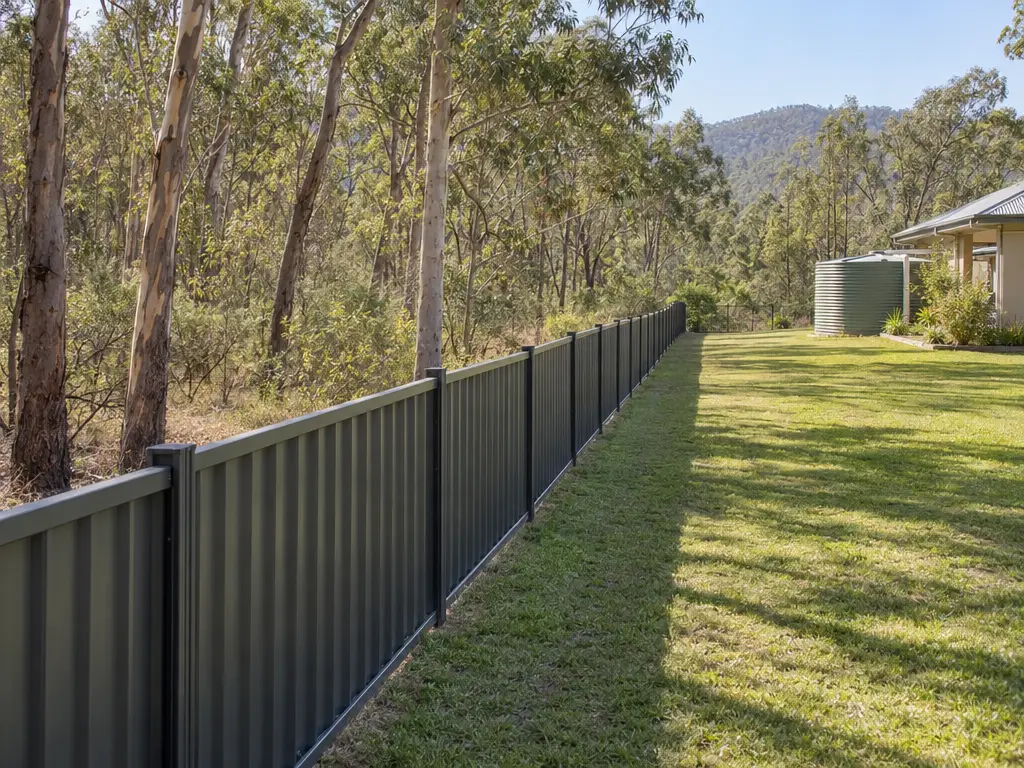
If the fence separates your lot from an adjoining lot, the Dividing Fences Act 1991 applies. That makes the material a two-household decision.
If you cannot agree, NCAT can order what the fence is made of, how high it is, where and when it is built, and how costs are split. A Fencing Notice must be served at least 1 month before applying. Our guide to who pays for a dividing fence in NSW walks through that notice step.
Here are the numbers in one place.
If chain mesh suits your boundary, yard, shed or site in Newcastle or the Hunter, the next step is to describe the job to Aardvark Chainwire Fencing. Include:
Send those details through the enquiry form on our contact page. To compare finishes and styles first, see black chain wire fencing and spear top fencing.
Pictures in this guide are illustrations, not photos of our jobs.